InterviewIthaca Reggae FestRuss Friedell
Interview: Russ Friedell, Ithaca Reggae Fest Talent Buyer
Talent buyer Russ Friedell explains how a Sunday got added to the seventh Ithaca Reggae Fest, why the festival sells no VIP tier, and how a 180-seat room on Green Street seeded Ithaca's reggae history.
by
Apr 11, 2025
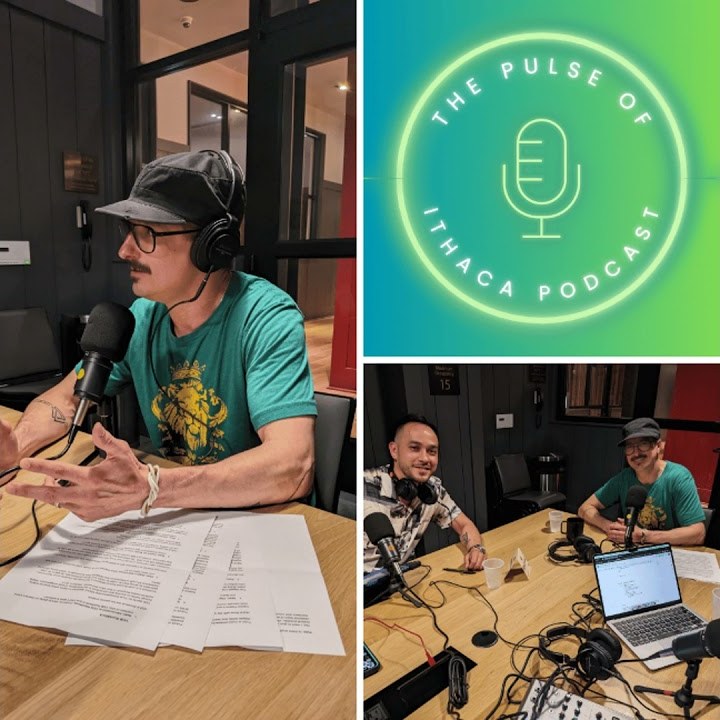
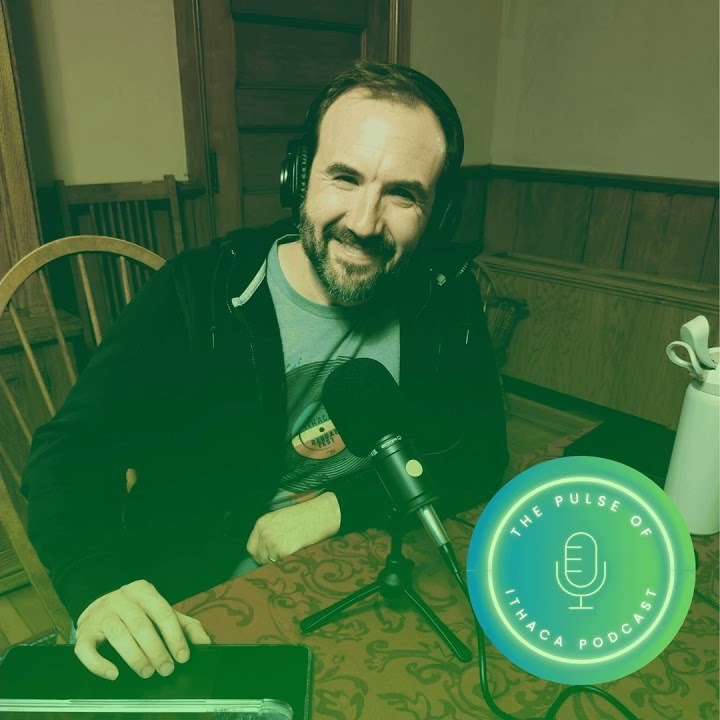
ITHACA, N.Y. — Russ Friedell, the talent buyer and marketing director for Ithaca Reggae Fest, sat for a 55-minute interview with the Pulse of Ithaca Podcast published on April 11, 2025, ten weeks before a seventh edition that had just grown from two days to three.
The third day exists because of an unsolicited phone call. Friedell said Steel Pulse’s booking agent reached out while the Saturday bill was being finalized, with the band playing Philadelphia on the Saturday and working its way through the Northeast afterward.
"I said, well, sure, I guess we'd do it for Steel Pulse if the price is right. And the price was right."
Russ Friedell
The festival ran June 20 to 22, 2025 at Stewart Park on the southern shore of Cayuga Lake. Friday was a free block party from 5 to about 9 p.m. at the park’s large pavilion. Saturday and Sunday were ticketed, sold as weekend or single-day passes, with children under 16 admitted free with a parent or guardian. Ticket prices rose on April 22.
Fifty years for the Sunday headliner
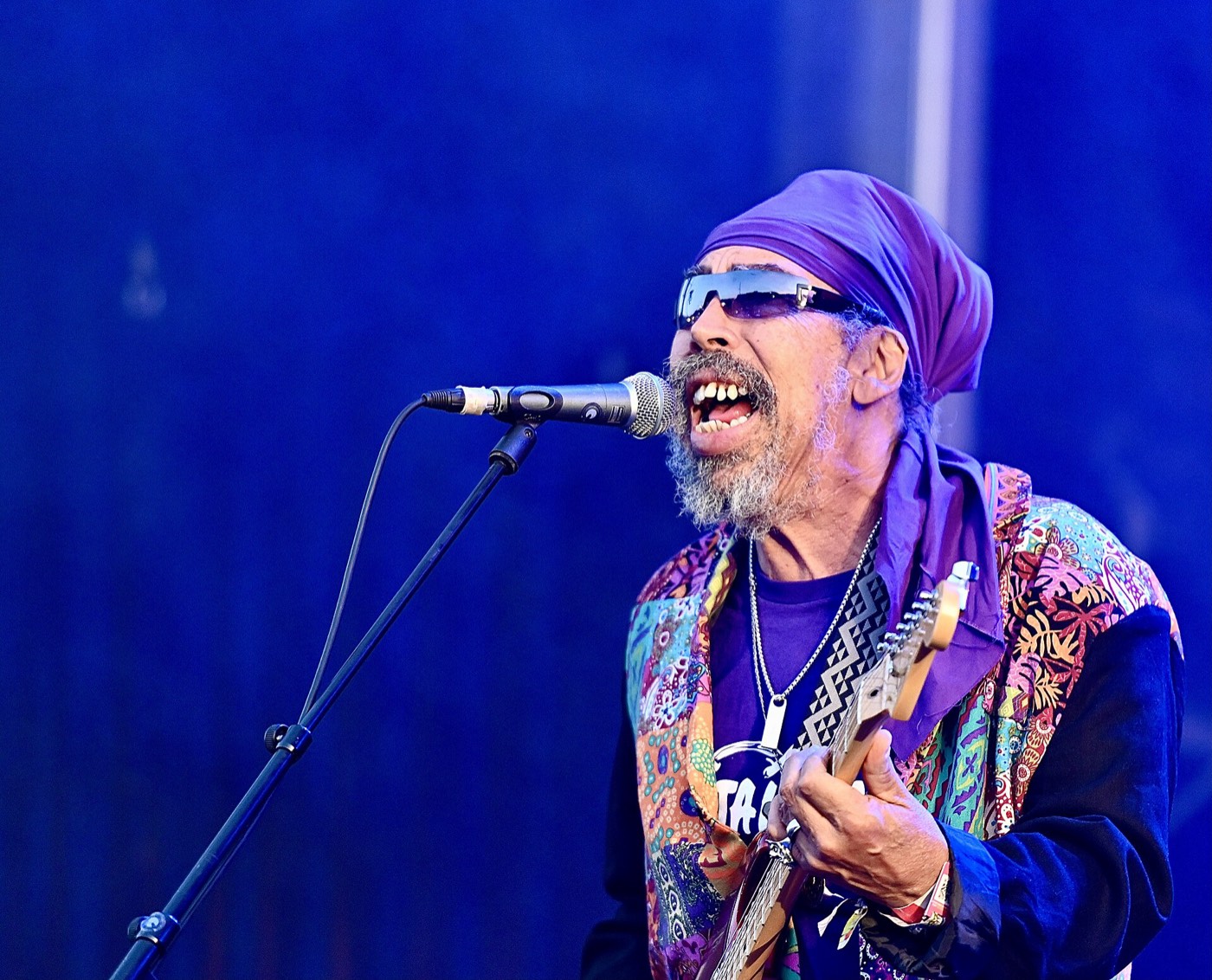
Steel Pulse formed in 1975 at Handsworth Wood Boys School in the Handsworth area of Birmingham, England, which put the band on a 50th anniversary run in 2025. The group aligned itself early with Rock Against Racism and played the organization’s first festival in 1978, and it was the first non-Jamaican act to win the Grammy Award for Best Reggae Album.
Once the Sunday was real, Friedell said he called Giant Panda Guerilla Dub Squad bassist James Searl directly.
“I said, hey, could you guys do the Sunday with us,” Friedell said. “And he said, absolutely, we would. We’ll be there.”
The Saturday bill Friedell described was topped by Kabaka Pyramid, the Jamaican artist who won the 2023 Grammy for Best Reggae Album for “The Kalling,” and Mihali, the Twiddle co-founder whose solo work runs toward reggae. Friedell traced the Kabaka Pyramid booking to a specific stretch of festival labor in 2019.
“I’m driving around in the pickup truck picking up the rental chairs and I’m blasting Kabaka Pyramid’s record at that point in time just dreaming like, man, this would be so cool,” he said. The artist played the festival in 2022 and GrassRoots in 2023, where a lightning storm cut the set short.
The rest of the weekend ran to Ithaca hip-hop group the Gun Poets, a new project featuring Searl on bass alongside a musician from Malawi, Double Tiger, New Planets, Big Mean Sound Machine, and the Notorious Stringbusters, whose members are connected to Ithaca Guitar Works. The full bill is read out in the episode.
Friday’s free party was built around Carter Van Pelt, a DJ, reggae historian and member of the team at VP Records, who Friedell said also founded the Coney Island Reggae Festival. The first Friday event the festival mounted was headlined by the British dub producer Mad Professor.
What a 180-seat room on Green Street set off
Asked why Ithaca has a reggae festival at all, Friedell answered with local history rather than with the lineup.
He credits John Peterson, who owned The Haunt when it was on Green Street, with cold-calling agents in the 1980s. Jamaican bands touring the United States at that point would typically play New York City, Boston and perhaps Washington, and stop there.
“Why don’t you come up here to little old Ithaca, New York, and play my 180 person room, The Haunt, for two nights, and I’ll give you a door deal,” Friedell said, describing the pitch. “It’ll sell out, and I’ll shack you up at my house after the show.”
That flow of touring reggae acts, in his account, is what shaped Kevin Kinsella and Elliot Martin, along with Lee Hamilton and Tommy Benedetti, into forming the band that became John Brown’s Body.
"There is decades of history in this town of the community, folks who have lived here for years and years, really being connected with Jamaican reggae, African reggae, world music and culture."
Russ Friedell
The festival’s stated mission is dedication to the protection of Cayuga Lake through a conscious celebration of Ithaca’s reggae community and its history.
The first year, announced too late
The first Ithaca Reggae Fest was in 2017, and Friedell is unsentimental about how it was run.
“I think that we announced the lineup for the first Ithaca Reggae Fest maybe like April 1st or something, like really late in the festival game,” he said. “You want to announce your lineup like 10 months in advance if you can.”
Tickets were $10 in advance and $20 at the gate. He puts the turnout at about 4,000 people on an 82-degree day.
The idea itself predates him. Friedell was managing John Brown’s Body in 2017 when Michael Mazza and Kinsella came to him wanting the band on a reggae festival at Stewart Park.
“I said, all right, well, yeah, we could do that, but have you guys ever produced a music festival before?” Friedell said. “They’re like, no. And I was like, all right, well, I’ll do it, but I’m going to help out.”
Early planning meetings ran weekly at a downtown bar with about 20 people talking over each other.
No VIP tier
Friedell returned several times to the festival’s pricing structure, and framed it as a deliberate constraint rather than a selling point.
“There’s no platinum VIP. We’re not selling meet and greets. We’re not selling bottle service,” he said.
He said the gap is filled by sponsors, describing tens of local, regional and national partners who contribute money. His stated reason is affordability in a period he characterized as one of income inequality, when “most of us are in the same boat, we’re all just trying to pay our bills and get by.”
The booking philosophy carries a related tension, which he named directly. Reggae originates in Jamaica, and a large American scene has grown up alongside it that sells a great many tickets.
“Our goal with Reggae Fest has always been to really showcase Jamaica,” he said. “That’s where this music comes from. That is who we owe it to, but also to sort of straddle that line.”
The park, and everything in it that is not a stage
Friedell describes Stewart Park as the festival’s principal asset. It is a city-owned free park at the southern end of Cayuga Lake, filled with willow trees, looking north up the length of the lake.
Several parts of the festival require no ticket. The tennis courts are converted into a skateboard park, run with the Philadelphia Skateboard Academy, reachable through its own outside gate. Friday’s block party is free.
Inside the gates, Friedell listed roughly seven food vendors running from Caribbean to Venezuelan to fried chicken and ice cream, an art village produced with the Greater Ithaca Activity Center that builds an interactive piece each year and upcycles it into the next, a water education village of interactive exhibits from Cayuga Lake protection organizations, a beverage village with Southern Tier Brewing Company and Wagner Vineyards, and a section of licensed cannabis vendors.
On the last of those he was matter of fact, and framed it as education rather than sales.
“Cannabis is a big part of reggae culture. Cannabis is a gigantic part of Rastafarianism, which is where a lot of reggae originally comes from,” he said. He said the vendors are there to answer questions from people who have never tried it, and noted that “there’s nothing worse than a stranger being like, here, eat this.”
Ninety-five percent plastic free, and honest about the five
Asked about sustainability, Friedell declined to claim the round number.
“We strive to be a plastic free festival,” he said. “When I say strive, I mean that we are like 95 percent a plastic free festival.”
Beer and wine are served in metal reusable cups that attendees keep and are encouraged to bring back in later years. The festival does not sell plastic water bottles and runs hydration stations set up with the City of Ithaca’s water department. Food vendors are pushed toward compostable service ware.
A physics degree, and a phone call from his brother
Friedell grew up in Oneonta, about two hours east, and started piano lessons at six. He took a degree in general physics, found the job that followed unfulfilling, and got out of it in 2007 when his brother Evan called from a band that needed someone to make the phone calls.
“I said, well, that sounds like a lot more fun than going to grad school for physics in a room with no windows and fluorescent lights,” he said.
He went on to manage bands including Big Mean Sound Machine and John Brown’s Body, spent time in Denver, moved back to the Finger Lakes before the pandemic and ended up working for the Finger Lakes GrassRoots Festival, where he is festival director. He also plays keyboards in the Jerry Garcia Band tribute Scuba Jerry.
He is direct about the part of the job nobody sees, which he sums up as planning and communication.
“There’s a lot to think about when you’re putting 4,000 people together to experience joy and music together for a concentrated amount of time safely,” he said. He listed bathrooms, vendor counts, and whether there is a booth with band-aids in it.
The weather is the recurring variable. “Our meetings always start out, it’s going to be a beautiful day, it’s going to be 82,” he said.
The one he keeps bidding on
Asked which artist is on his wish list, Friedell answered immediately: Chronixx, whose name he spelled out on air.
“I put in an offer again this year, and I’ll keep putting in an offer in forever,” he said.
Asked what he would tell somebody new to town, he went back to the park and to the free parts.
“First off, if you’ve never been to Stewart Park, please go as soon as you can,” he said.
Watch the full episode on YouTube
The author co-hosts the Pulse of Ithaca Podcast and conducted this interview, and builds and maintains the Ithaca Reggae Fest website. Quotations are transcribed from the episode audio and lightly trimmed for filler. Speaker, band and venue names have been corrected against published sources where the automatic transcript garbled them, and names that could not be verified against a published source are omitted.
The 7th annual Ithaca Reggae Fest ran June 20 to 22, 2025 at Stewart Park in Ithaca, New York. Pulse of Ithaca Podcast, Episode 20, “Interview with Russ Friedell from Ithaca Reggae Fest,” running 55 minutes, published to the show’s YouTube channel on April 11, 2025.
Sources: Pulse of Ithaca Podcast, Episode 20, Pulse of Ithaca Podcast channel, Ithaca Reggae Fest, Steel Pulse, Kabaka Pyramid, John Brown’s Body, Carter Van Pelt, quoted as a VP Records reggae authority, bandsthatjam.com, Ithaca Reggae Fest 2026 lineup.