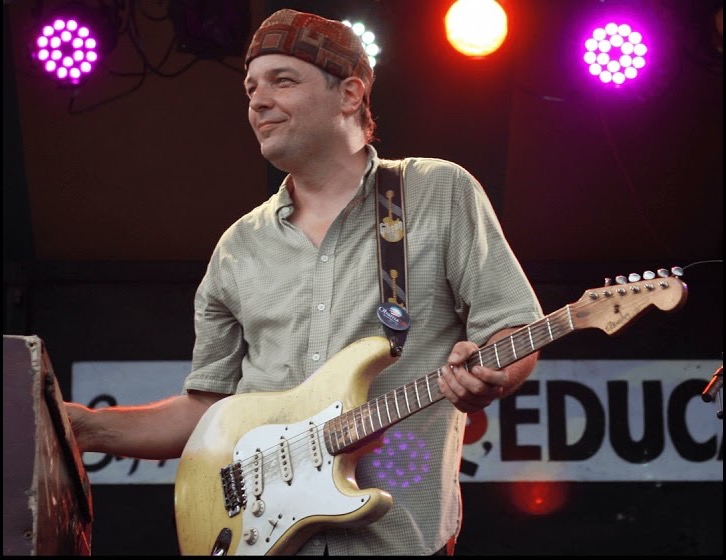
InterviewDonna the BuffaloJeb Puryear
Interview: Jeb Puryear, Donna the Buffalo Co-Founder
In an hour-long Pulse of Ithaca Podcast episode recorded at festival headquarters, the Donna the Buffalo co-founder walks back through the fiddle scene, the mispronounced band name and the $78,000 first festival budget.
by
Aug 31, 2026
TRUMANSBURG, N.Y. — Donna the Buffalo co-founder Jeb Puryear sat for an hour-long interview with the Pulse of Ithaca Podcast, recorded at the Finger Lakes GrassRoots Festival headquarters in Trumansburg and published to the show’s YouTube channel on June 20, 2025.
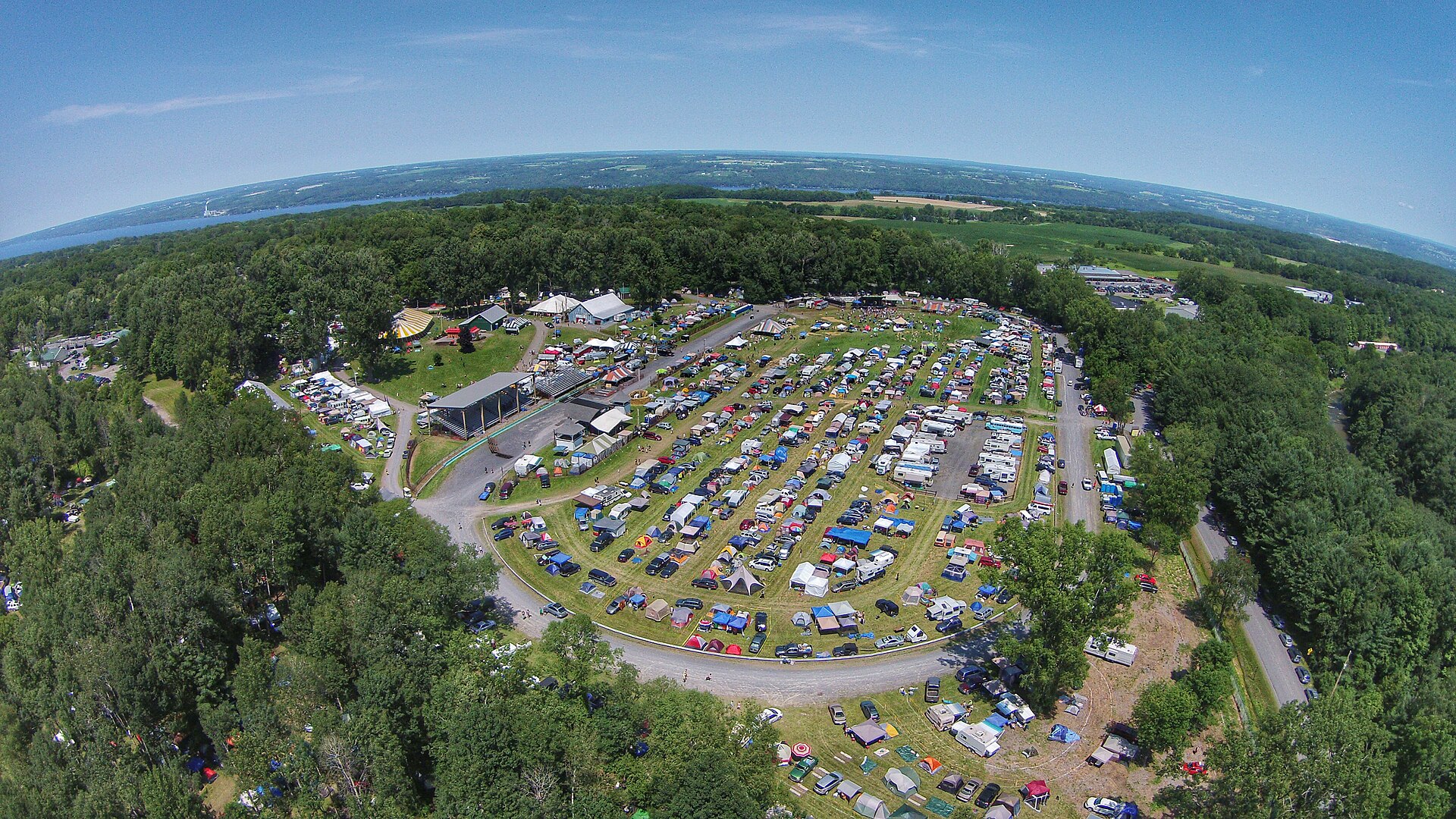
The episode traces two origin stories at once: how Donna the Buffalo formed out of a local old-time music circle, and how the festival the band hosts grew from a single benefit concert into a four-day event at the Trumansburg Fairgrounds. Puryear puts the first festival’s budget at $78,000, funded in part by $5,000 borrowed from a friend.
The full episode runs about an hour and is embedded below.
A fiddle, and a scene at the Cosmos
Puryear grew up around Trumansburg in a house he describes as the one everybody congregated at, with a father who loved old-time music. He was born in 1966 and started on fiddle at eight.
"I made the joke before that I learned how to play the fiddle in a desperate attempt to win my father's approval."
Jeb Puryear
The scene he describes centered on a restaurant called the Cosmos, next door to the Rongo, where the Highwoods String Band played and the crowd did a step Puryear calls the hippie hop.
“The floor would be deflecting maybe six to eight inches in this place, and it was very steamy, and it was just super energetic, just a real beautiful scene,” he said. “And me being a little kid, I thought this was going on all over the world. So I figured if I learned how to play fiddle, I’d have it made.”
He learned partly by imitation, naming fiddler John Specker as an early model. “He’d play it, and then he’d say, you play it like I’m playing it,” Puryear said.
How the band got a name it did not choose
Donna the Buffalo came out of the same circle. Richie Stearns had the banjo covered and was also playing with the Horse Flies. Tara Nevins was writing songs and playing in the Heartbeats. Jim Miller, who Puryear describes as a scientist with a job at the Natural History Museum, played guitar, old-time fiddle and some banjo.
The group had no repertoire and no name when Jenny Stearns, then booking music at the Cabbagetown Cafe on Eddy Street in Ithaca, offered them a gig. They practiced for a couple of weeks.
One early idea for a name was Dawn of the Buffalo.
“Somebody mispronounced it in some kind of a Long Island accent,” Puryear said. “And then somebody heard Donna the Buffalo. And Dawn of the Buffalo was way pretentious for where we were at, you know, so we chose the other name.”
Artist Damian Carr drew the lady buffalo image that became the band’s look for a stretch.
Why old-time music does not sound like the band it produced
Puryear is direct about the distance between the music he came up playing and the music Donna the Buffalo makes.
“Playing old-time music is thrilling for the people that are playing it, and a few other people that are willing to pay that much attention,” he said. “To most people it’s like somebody started a lawn mower motor. You have to listen, really listen. And when you listen, it slows down in your mind and it becomes very expansive.”
What carried over, he said, was not the sound but the way the players lean on each other. Asked whether the Grateful Dead shaped the band’s approach, he said the comparison came from listeners rather than from the band.
“A lot of people would say we sounded a little like the Grateful Dead,” he said. “But strangely enough, I’d never heard the Grateful Dead. I don’t think any of us really did.”
He also describes the ordinary problem of keeping a band together. “The big challenge at first when you’re in a band is to try to get everyone that’s in the band to feel like being in a band,” he said, listing day jobs, family commitments and other groups.
Asked when he knew the band had broken out, he said the question is hard to answer from inside it.
"This life tends to make a lot of really talented people feel like something the cat dragged in."
Jeb Puryear
“The Beatles were really good, and they did really well, and you’re obviously not doing as good as that,” he said. “So you just feel like you’re in the struggle, and you’re just taking a day and a year at a time.” He added that a band lucky enough to have a great night is in a very small percentage of people who get that experience.
A benefit that came before its cause
The festival began with a single concert. According to the festival’s own history, a 1990 benefit at the State Theatre in Ithaca featuring Donna the Buffalo, the Horse Flies and Neon Baptist raised more than $10,000 for AIDS Work of Tompkins County. The same history says Puryear started the GrassRoots Festival in 1991.
Puryear’s account of how that first concert came together runs in an unusual order. He credits the initial idea to Jim Miller, as a way to build camaraderie between bands that were already sharing players, and says the benefit framing came second.
“We kind of wanted to remove this entrepreneurial thing out of it, and so we decided to make it a benefit,” he said. “Then we were looking for someone to make it a benefit for. This is slightly different than a lot of benefits. They’re cause-first driven, and then they come up with an event based on their cause. But we kind of came up with an event and then chose a cause.”
He picked the fairgrounds for the festival that followed on a practical read of how people behave. “A lot of people won’t go somewhere they’ve never been,” he said. “But they’re more likely to go somewhere that they’ve been already and feel familiar.” His mother, he said, came up with the name GrassRoots.
$78,000, and a friend named Sally
The money side of year one, in his telling, was thin.
“We borrowed $5,000 from our friend Sally,” Puryear said. “She’s very gracious, God bless her. And we sold ads in the program, and that was it. The first year’s budget was $78,000.”
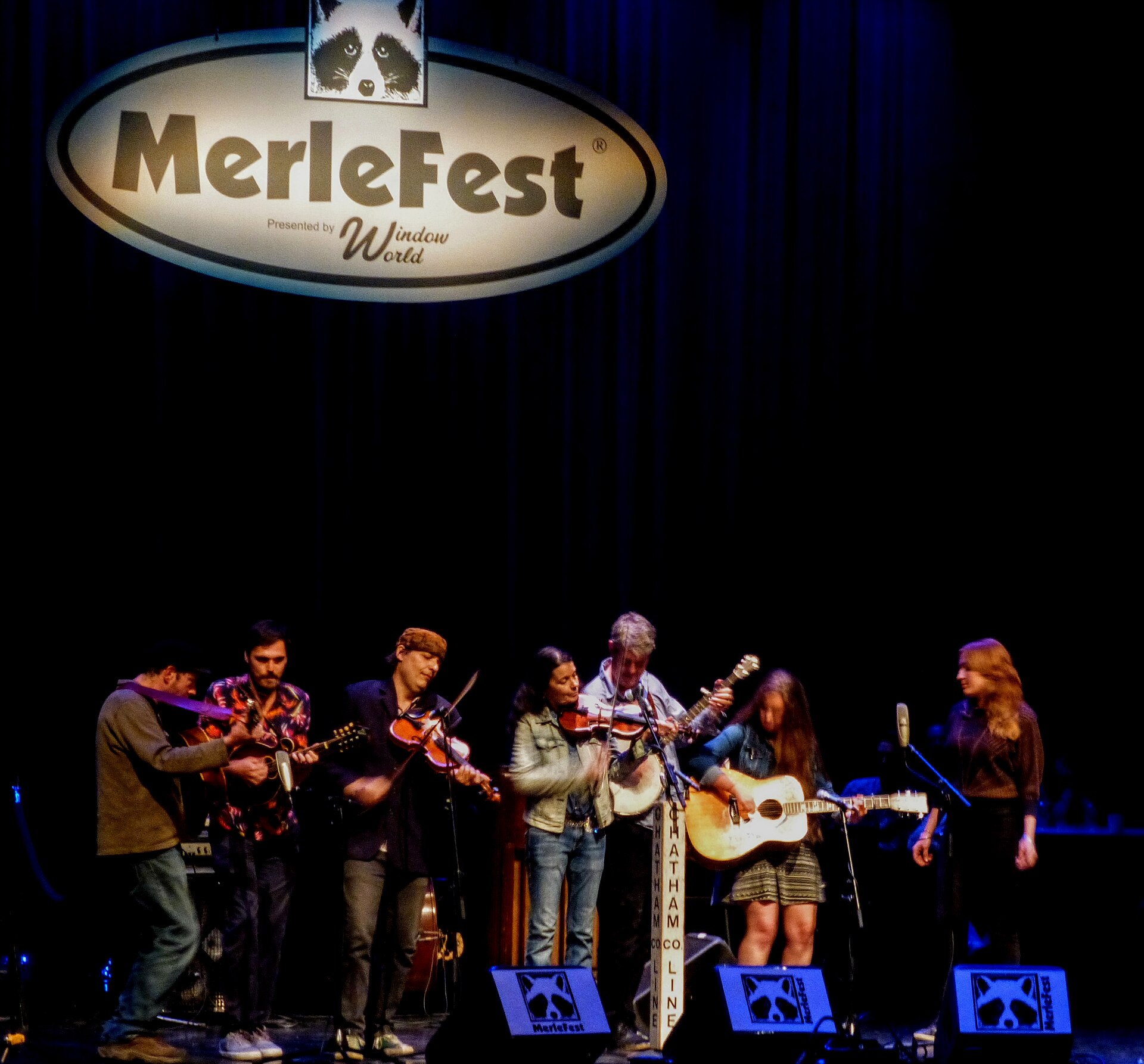
He said the second year ran much like the first and the third broke even. He remembered 10,000 Maniacs on the first year’s bill and a Saturday that rained from first thing in the morning and did not stop. Rusted Root, he said, came in the second or third year and was a large part of the festival’s growth. Among later bookings, he named a Merle Haggard set as a favorite.
The turning point he describes was not financial. He recalls his friend Alan Marshall looking out over the second year and telling him it did not look like something that was going to stop.
“It’s a vehicle,” Puryear said. “It’s driving down the road. It’s going to keep going.”
What he says the festival is trying not to do
Asked about the festival’s programming, Puryear declined to take credit for the lineup and said the booking is handled by others. He was more expansive about what he thinks makes the event work, and much of it is framed as restraint.
“One of the things that’s made GrassRoots interesting is to let it be known that it’s the people that come, it’s their festival,” he said. “So we try to keep it very minimal, what GrassRoots is trying to tell people. Telling people to go left when they want to go right, or telling them to eat when they want to drink.”
He describes an intentional split between the cultural content and the structure around it. “We’ve tried to remain a very cultural event, but the structure of the event to be culturally neutral, so anyone would feel comfortable coming and enjoying,” he said.
On what a festival does that a concert cannot, he offered a compressed version: “You come for one band, you walk away loving 12 bands.” Strangers talk, he said, because everyone is sharing the same experience.
He also mentioned writing a symphony that an orchestra performed the previous year, calling it a remarkable thing to be involved in. The episode does not name the orchestra or the piece.
The 33rd, and the count that stopped adding up
The interview was recorded ahead of the 33rd Finger Lakes GrassRoots Festival, which ran July 17 through 20, 2025 at the Trumansburg Fairgrounds with Lukas Nelson, Lucius, Cimafunk and Sierra Hull billed alongside more than 80 other acts, per the 33rd lineup announcement. Puryear named Keith Frank and Lukas Nelson as sets he was looking forward to.
He is candid that the edition number no longer tracks cleanly against the years.
“It’s gotten complicated since the covid, because it started in 1990, and then we had 29B,” he said. “So I personally have lost a little track.”
The festival has since run its 34th edition, July 16 through 19, 2026, again at the fairgrounds, and the 9th annual GrassRoots Culture Camp ran July 12 through 15, 2026 in the days before it.
Puryear closed on the people who have written the festival off.
“There’s some people out there that probably have decided that GrassRoots is not their thing, and I would encourage them to take a second thought about that,” he said. “We as human beings struggle being peaceful and happy. And so this is an attempt to be peaceful and happy.”
Watch the full episode on YouTube
The author hosts the Pulse of Ithaca Podcast and conducted this interview. Quotations are transcribed from the episode audio. Speaker names and band names have been corrected against the festival’s own listings where the automatic transcript garbled them.
Pulse of Ithaca Podcast, Episode 22, “Interview with Jeb Puryear of Donna The Buffalo,” published June 20, 2025, recorded at the Finger Lakes GrassRoots Festival headquarters in Trumansburg, New York. The Trumansburg Fairgrounds are at 2150 Trumansburg Road, Trumansburg, NY 14886, in Tompkins County. Photograph from the episode artwork.
Sources: Pulse of Ithaca Podcast, Episode 22, Finger Lakes GrassRoots Festival history, Finger Lakes GrassRoots Festival.